
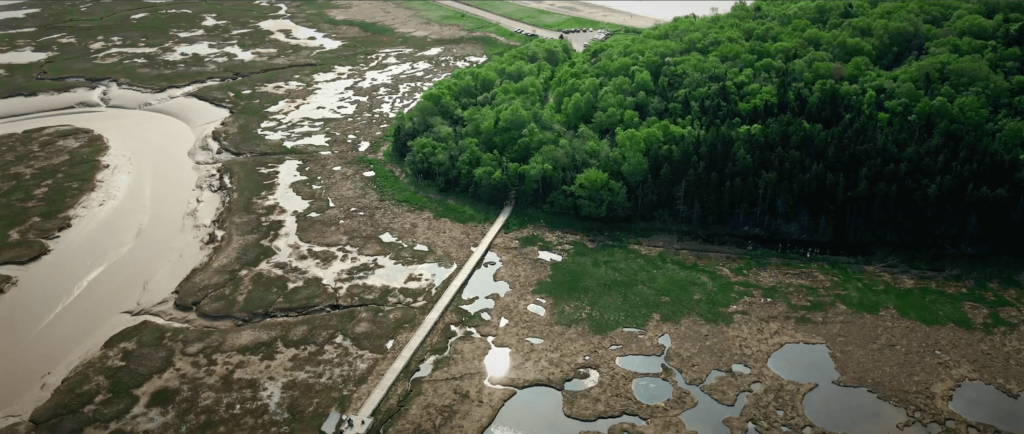



Hampton Lighthouse River Centre

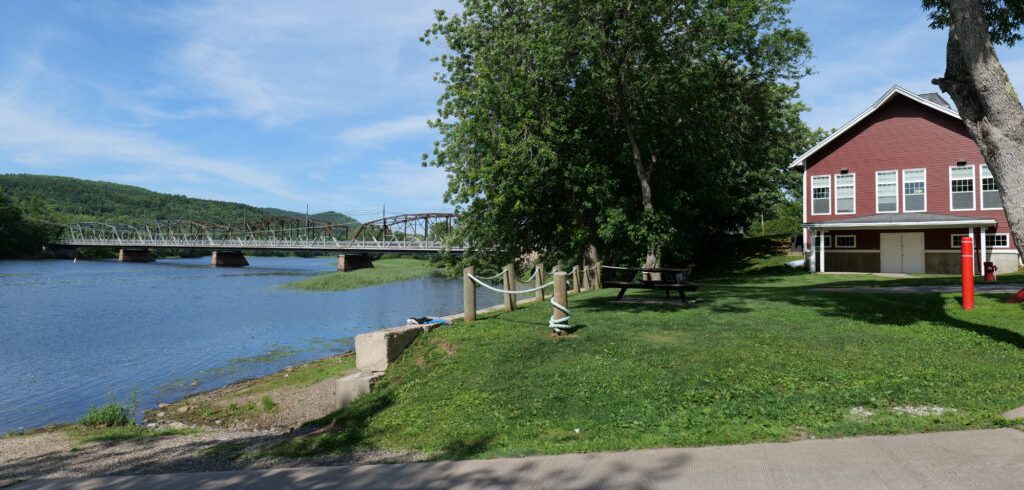
Hampton is a lovely little community along the Kennebecasis River with some incredible history and more ice cream shops than you’d expect! The Hampton Lighthouse River Centre is at the centre of town and gives access to all kinds of adventures along the river. This is an important site to talk about risks associated with climate change and flooding, and it is located on a floodplain.
How to Get There
Hampton can be reached by following Highway 1 between Sussex and Saint John.
Geology
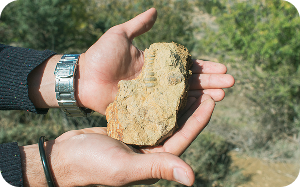
The rocks near the Hampton Lighthouse River Centre are rarely seen. The valley is bounded on the south by sandstone and conglomerate and on the north by Silurian volcanic rocks. The river here meanders along the flat valley, and the land is quite marshy. The looping meanders of a mature river can be seen on the geological map. In this case, the bedrock you do not see is controlling the landscape. To the southwest, the river turns west along a fault line.
An interesting geological lesson learned here is that of modern analogues. We can examine the modern environment to help us understand paleoenvironments. To the east of Hampton, Highway 1 passes through impressive outcrops of sedimentary rocks that were formed 350 million years ago. Small ripple marks and large-scale ripples can be seen along the highway. Fossil logs, fish and trace fossils have been found in the Albert Formation. What kind of environment was this?
If you take a boat ride along the Kennebecasis River at Hampton, look down into the river. It is often shallow enough to see ripples on the bottom, waterlogged logs rolling downriver, fish, and winding trails left by clams and other animals. It looks remarkably like the Albert Formation that geologists believe represents shallow rivers, lakes and swamps from the Early Carboniferous Period.
Low-lying areas along rivers are called floodplains for a reason. Try coming here in April or May. Boating along the narrow stretches of the Kennebecasis River valley is a different experience during flood season. In a kayak or canoe, you can paddle through the trees. The river meanders from one side of the valley to the other. Old meander scars are visible on the geologic map or on satellite images. During flood season, the entire valley is susceptible to flooding.
History
The Town of Hampton is located 35 km northeast of Saint John, and is a small, friendly community with many points of interest and beautiful natural scenery. It’s on the Kennebecasis River, a tributary of the St. John River. It is not certain how the name Hampton was chosen, but it is thought that the name was brought by the pre-Loyalist English settlers.
The Kennebecasis River was the chief means of transportation. Over time, roads, a ferry, and the railroad all contributed to the growth of this area.
In the early 1800’s, shipbuilding flourished, but agriculture was the chief industry. There was also a tannery, a shingle mill, a grist mill, a sash and carriage factory, a bobbin and spool factory, a mill and two casket makers. On Front Street could be found various kinds of stores, hotels, a lawyer, a blacksmith, a doctor and an undertaker.
Kingston had been the Shiretown of the County (Kings) until 1870, when it was moved to Hampton. A Court House was built, but the granite blocks of the jail were dismantled at Kingston and hauled by oxen and horse, on ice and road, and rebuilt at Hampton. The official weights and measures found in the Court House are made of special metal and were brought from England in 1854.
The grounds of the Court House were the scene of the celebration of Coronation Day, 1937, for King George V. To mark this historic event, over 2,000 people gathered to watch a parade and listen to music, speeches, and prayers. The program was timed to hear the King’s broadcast speech, which was followed by a ‘Fue de Joie’ fired by the machine gun troop of the 8th Hussars and then the National Anthem. In the evening, there was a Band Concert with community singing, a bonfire, fireworks and a dance in the agricultural hall.
Among other things, the Village of Hampton had the honour of having the first recorded telephone in the Province. It was leased by the agents to G. & G. Flewwelling Co. for testing purposes. There was another line between the mill and the store. The first Central for the NB Telephone Company was in T. C. Donald’s drug store.
The Kings County Museum, located in the Centennial Building, is operated by the Kings County Historical and Archival Society. It is open to the public and houses an extensive collection of artifacts related to past life in Kings County and elsewhere.
Hampton is blessed with beautiful marsh areas, rich farmland and abundant wildlife. In the spring, the marshes flood to prepare this nutrient-rich habitat to nourish the extraordinary wildlife and variety of vegetation it contributes to the Province of New Brunswick and to Hampton, a nature lover’s paradise. In the summer, boaters sail the rivers and lakes, and hikers climb the mountains and walk the trails in unpolluted air. Brilliant reds, yellows and greens edge the roads, decorate the streets and replace the lupins before the snow comes. Then the skis come out, snowmen smile, and skates skim the river. The Town of Hampton is a truly beautiful community to live and play in, offering its residents services and facilities that provide an enhanced quality of life.