
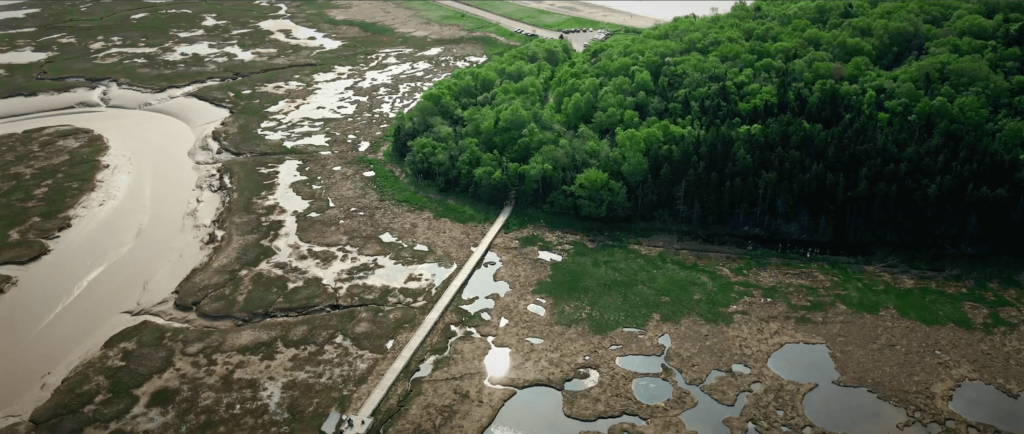



Dominion Park

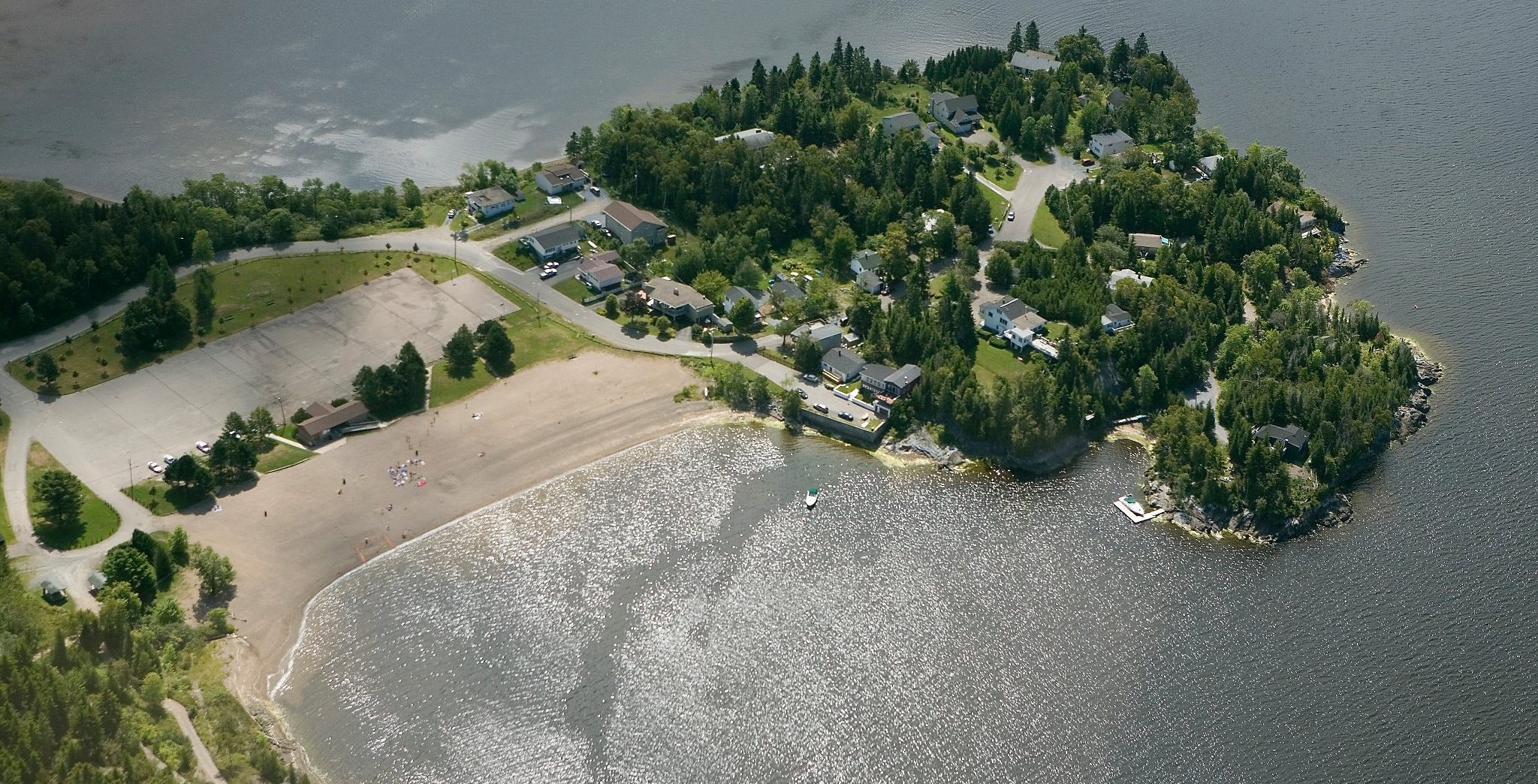
Dominion Park is home to one of the best beaches for swimming in Saint John, in addition to being the site where, in 1890, the oldest evidence of life on Earth was first identified. Stromatolite fossils found in the Park are approximately 1 billion years old and record evidence of ancient cyanobacteria. While older evidence of life has since been discovered, this site holds a special importance as the first!
How to Get There
Dominion Park is on the west side of Saint John, but it can be a little tricky to find! To get to the park, you’ll want to follow Manawagonish Road until you reach an intersection with Dever Road. You’ll turn at these lights and then turn right at Green Head Road. This road twists and turns, but it will eventually lead you to Green Head Island, where you will keep right to arrive at the main gates of the park.
Geology
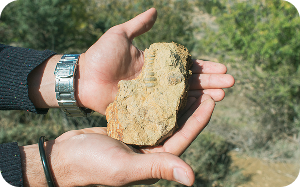
Green Head Island is the “Type Locality” to see a Late Precambrian marble that is about 750 million to 1.2 billion years old. Marble is a metamorphic rock created when limestone is subjected to heat and pressure, causing it to transform and recrystallize. The limestone was once sediment on the floor of a warm, shallow sea.
Precambrian is the name given to a very long period of geologic time. As the name suggests, it is everything before the Cambrian Period, and encompasses the time from the formation of the Earth 4.6 billion years ago to the start of the Cambrian 542 million years ago. Four billion years is a long time, and to call it all Precambrian simplifies a complex period of Earth history. In the 1800s, fossils were one of the only tools to distinguish Precambrian from younger rocks. Cambrian rocks often contain abundant fossils such as trilobites. The first presumed Precambrian fossil was discovered in the 1860s and was part of an intense search for the first record of Precambrian life. This first discovery was discounted by the end of the 19th century. Meanwhile, Saint John geologist George Matthew described a fossil in 1890, not far from Dominion Park. His identification of the stromatolite Archaeozoon acadiense has withstood scientific scrutiny and is now known as the first Precambrian stromatolite fossil described in scientific literature.
History
The Green Head lime quarry in Saint John includes remains of built structures and quarries preserving one of the last historic lime kiln operations in southern New Brunswick. It includes remains of the quarry, kiln foundations, wharf timbers and foundation walls of homes.
During the 1800s, the lime business was booming in the region, with as many as nineteen kiln sites in operation. Quarries are located in the Precambrian Ashburn Formation marble of the Green Head Group. The Green Head quarry was operated for many years by Joseph and Frank Armstrong, whose lime product was known throughout the Maritimes for its quality. Lime produced at the Armstrong Quarry was used locally.
Buildings constructed in Uptown Saint John after the Great Fire of 1877 were mortared using Green Head lime. Joseph Armstrong was a pioneer in the development of the lime industry, which was worth almost $100,000 in export trade by 1889. The quarry operation is a historic reminder of a mining industry that supported southern New Brunswick’s economy throughout much of the nineteenth century.