
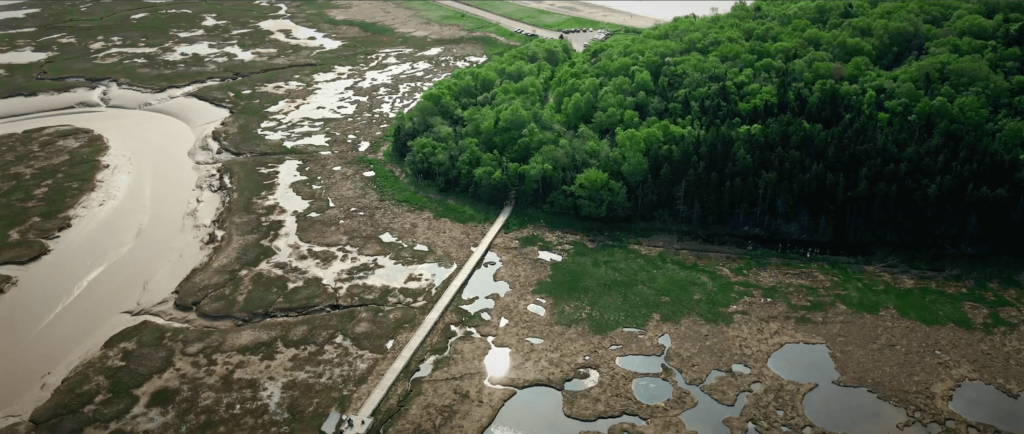



Rockwood Park

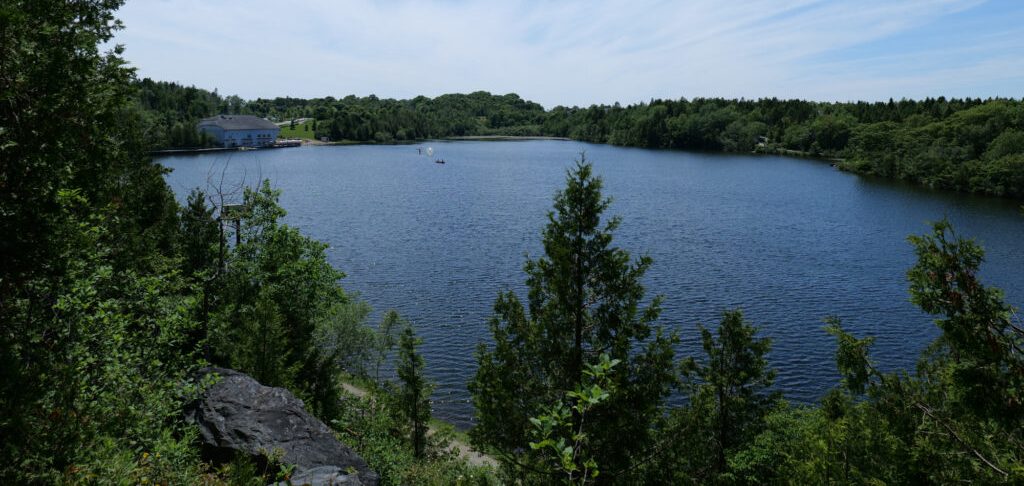
Rockwood Park offers 2,200 acres of unspoiled natural beauty, with ten lakes and 55 trails and footpaths. The geologic history is represented by unique rock formations, caves and waterfalls. There is no shortage of activities at the Park, including camping, horseback riding, kayaking, rock-climbing, geocaching, dining, swimming, snowshoeing and even a dog park for our furry friends!
How to Get There
Rockwood Park is located within the city of Saint John, off Mt. Pleasant Ave. Parking is available at Lily Lake near the interpretation centre on Lake Drive.
Geology
Rockwood Park is appropriately named! The rocks found here are quite diverse. They include Precambrian marble, Precambrian gneiss, Precambrian to Cambrian igneous rocks (granite, tonalite, granodiorite and dacite), as well as Devonian sandstone and conglomerate. Two geologic terranes are found in the park. A major fault called the Caledonia Fault separates two geologic terranes found in this area. The main road past the Lily Lake Pavilion follows the fault line.
Rockwood Park has had a long history of scientific study and geological exploration. The Natural History Society of New Brunswick examined the geology of the park in the late 1800s. Rock specimens collected by Society members in the park can be found in the New Brunswick Museum collection. Howes Cave was discovered in the 1860s and described in the Society Bulletin in 1904. It formed as a result of carbonate bedrock (marble) being dissolved by natural acids in rain and groundwater. In the 1800s, a graphite mine operated near the outlet of Lily Lake.
Rockwood Park has many trails that allow opportunities to explore the geology on foot, on a mountain bike, or on horseback. Get up-close by rock climbing with a guide. In the winter, it is a great place to explore on cross-country skis or snowshoes.
History
Rockwood Park was designed by Calvert Vaux, one of the designers of New York City’s Central Park, in the mid-19th century. The park was initially established around Lily Lake during the late 19th century, and was named in a vote by citizens in the area around the park. It is the second-largest urban park in Canada.
Lily Lake was one of the first sources of fresh water for Saint John. Water was hauled from the lake by tanks and sold for 1 cent a bucket. In 1907, a court battle ensued as to who had the right to the ice in Lily Lake: the ice cutters or the skaters. Although the ice cutters had been granted permission to erect an ice block conveyor in previous years, the skaters won and for decades, the lake was a center for outdoor winter recreation.
In 1926, speed skater Charles Gorman won the World Speed Skating Championship on Lily Lake. Gorman, who fought in Vimy Ridge in WW1, returned to speed skating and represented Canada in 2 Olympic Games.