
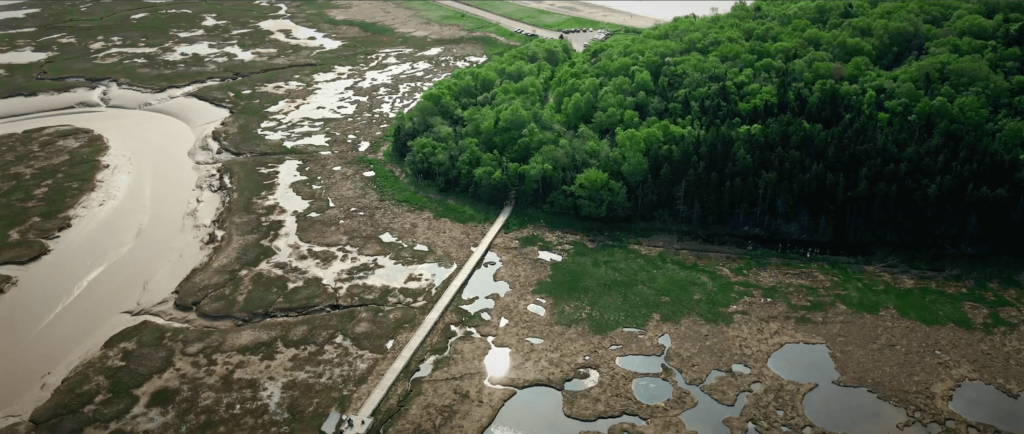



Norton Moosehorn Creek

Norton Moosehorn Creek is the site designated to discuss the Norton Fossil Forest, an incredible site exposed during the construction of Highway 1. It is not publicly accessible, and stopping on the highway is not permitted. The fossil forest itself consists of more than 700 individual trees, making it one of the largest and oldest fossil forests in Canada. Many are now in the collections at the New Brunswick Museum.
How to Get There
Take the Norton exit off of Highway 1. You will take a sharp left turn on your way into town. While the main roads veer right a few 100 metres later, you will keep straight. Follow this road for 3 km until you arrive at a dead end. From here, you will follow a trail under the highway to arrive at the Moosehorn Creek covered bridge.
Geology
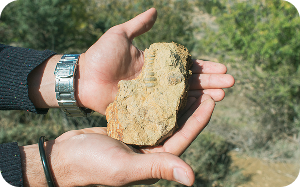
Highway 1 from Bloomfield to Sussex cuts through beautiful exposures of a Lower Carboniferous rock unit that represents lake, swamp and river deposits. Highway outcrops display nice examples of shallow water ripples. Large-scale ripples created along river bottoms are more difficult to see. Ripple crests can be metres apart, and sometimes fossil tree logs are trapped in the ancient ripple troughs.
Stopping on the highway is not permitted!
Outcrops near Norton record the remains of ancient rivers that drained highlands built during the creation of the supercontinent Pangea. Rivers meandered along valleys, and shallow lakes and wetlands dotted the landscape. Along the margins of the rivers, dense forests of lycopod trees grew on the floodplains. The trees, known as Lepidodendropsis, grew to about 10 metres tall and up to 20 centimetres in diameter. A recent study of the rocks near Norton showed that trees grew in dense thickets on thin soil horizons. Floods regularly drowned the forests. Trace fossils of small arthropods have been found, and rare remains of fish are known from this site.
Moosehorn Creek is a small stream that flows into the Kennebecasis River from the south.
History
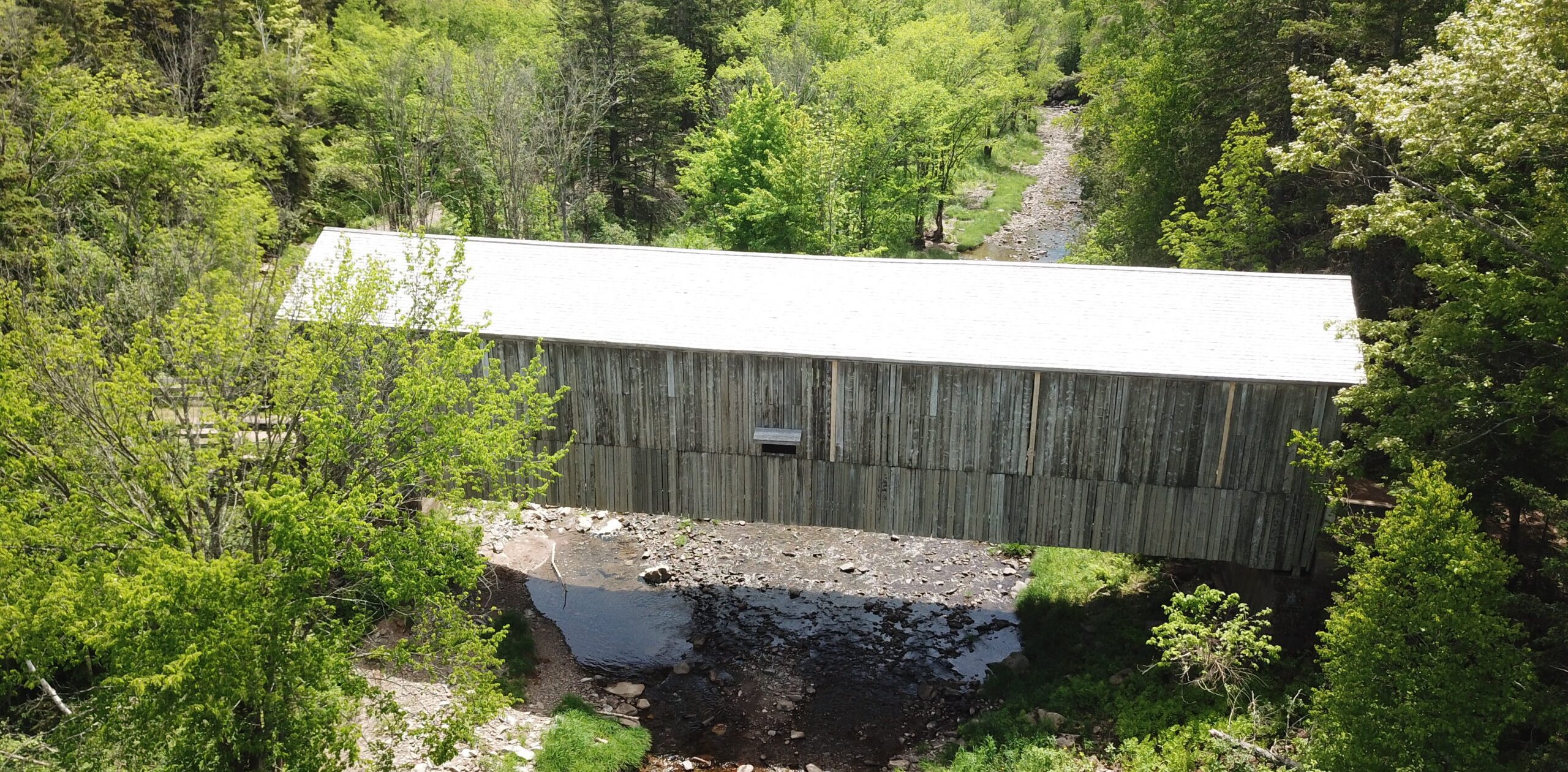
A covered bridge built in 1915 crosses Moosehorn Creek. The bridge can be accessed along a trail that crosses under Highway 1. The trailhead and parking is located 3.5 kilometres southwest of Norton along a dirt road. The bridge was built seven years after the first fossils were discovered here by geologists from the Geological Survey of Canada. Palaeobotanist W.J. Wilson described collections of lycopods (plant fossils) he found. Wilson had been a member of the Natural History Society of New Brunswick and lived in Saint John before moving to Ottawa to join “The Survey”.
This area of New Brunswick is well-known for its covered bridges. Bridges were covered to protect them from rotting. You might want to tour covered bridges and observe the geology near them.